Misinformation has become one of the biggest challenges online because false or misleading information can spread quickly and influence how people think, react, and make decisions. For my blog post, I explored RumorGuard and Harmony Square to better understand how misinformation works, how it spreads, and how interactive tools can help people recognize them as well. Both tools showed me that misinformation is not always obvious, which is why media literacy is so important!!!Understanding Misinfromation Through -RumorGuard
RumorGuard is a tool created by the News Literacy Project that helps people recognize and understand misinformation by breaking down real examples of viral posts and claims online. When I used the site, I noticed that it does not just say whether something is true or false. Instead, it explains why a claim is misleading by walking through specific factors like the source, the evidence, the context, and whether the information is authentic. The homepage shows current examples of misinformation, and when you click on one, it gives a clear explanation along with a “takeaway” that helps you apply what you learned to other situations! Honestly, I found this really helpful because there are times I see things online and just stop paying attention since I am not sure what is real or not. RumorGuard makes it easier to stay informed without feeling overwhelmed because it shows you how to actually break things down instead of just guessing.
What stood out to me is that RumorGuard teaches you how to think, not just what to believe. It uses a system of credibility factors—like checking if the source is reliable, if there is actual evidence, and if the information is taken out of context—to help you evaluate information on your own. This made it feel more practical because I could see how I would use those same steps when scrolling through social media. Overall, I would say RumorGuard is effective because it turns misinformation into something you can actually break down and understand instead of just reacting to it!
RumorGuard
These examples from RumorGuard show how a viral claim—like the one about Iran releasing a list of U.S. target cities—is analyzed step by step. The platform starts by presenting the claim, then breaks it down by labeling it as false and explaining why it is misleading, and finally applies credibility factors like source, evidence, and context to show how the information should be evaluated!!!
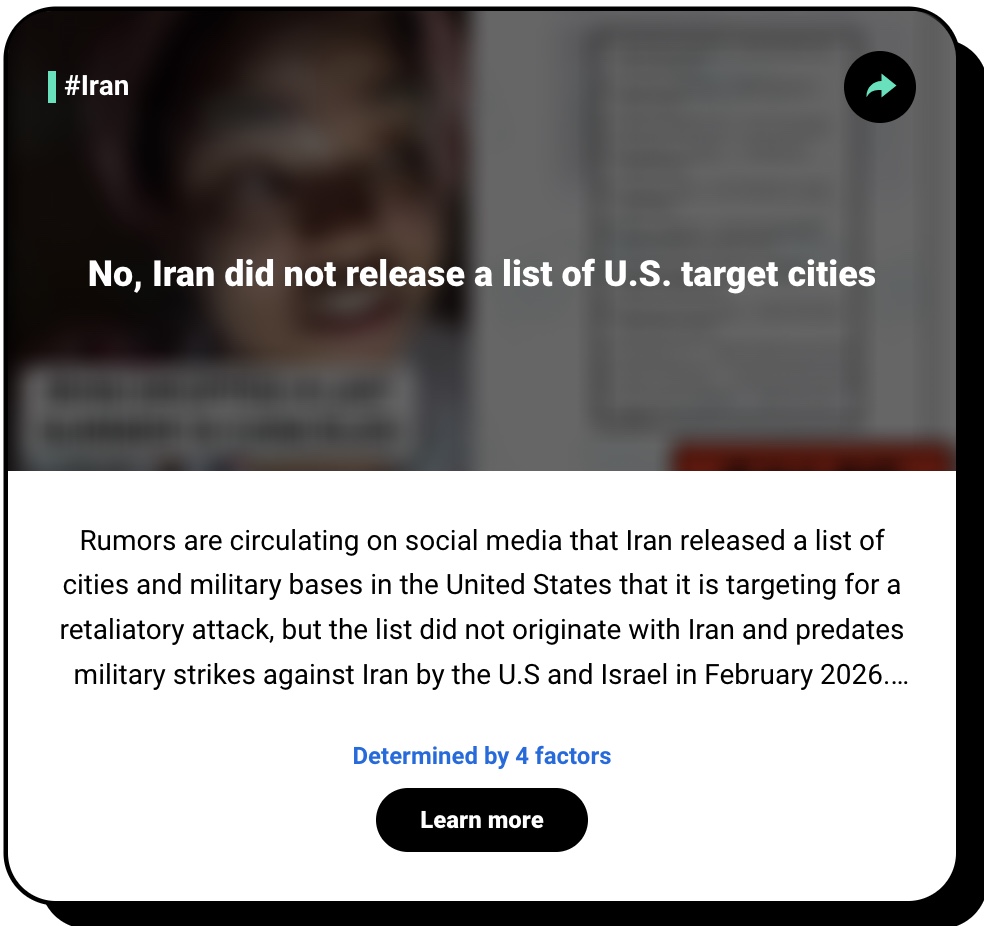
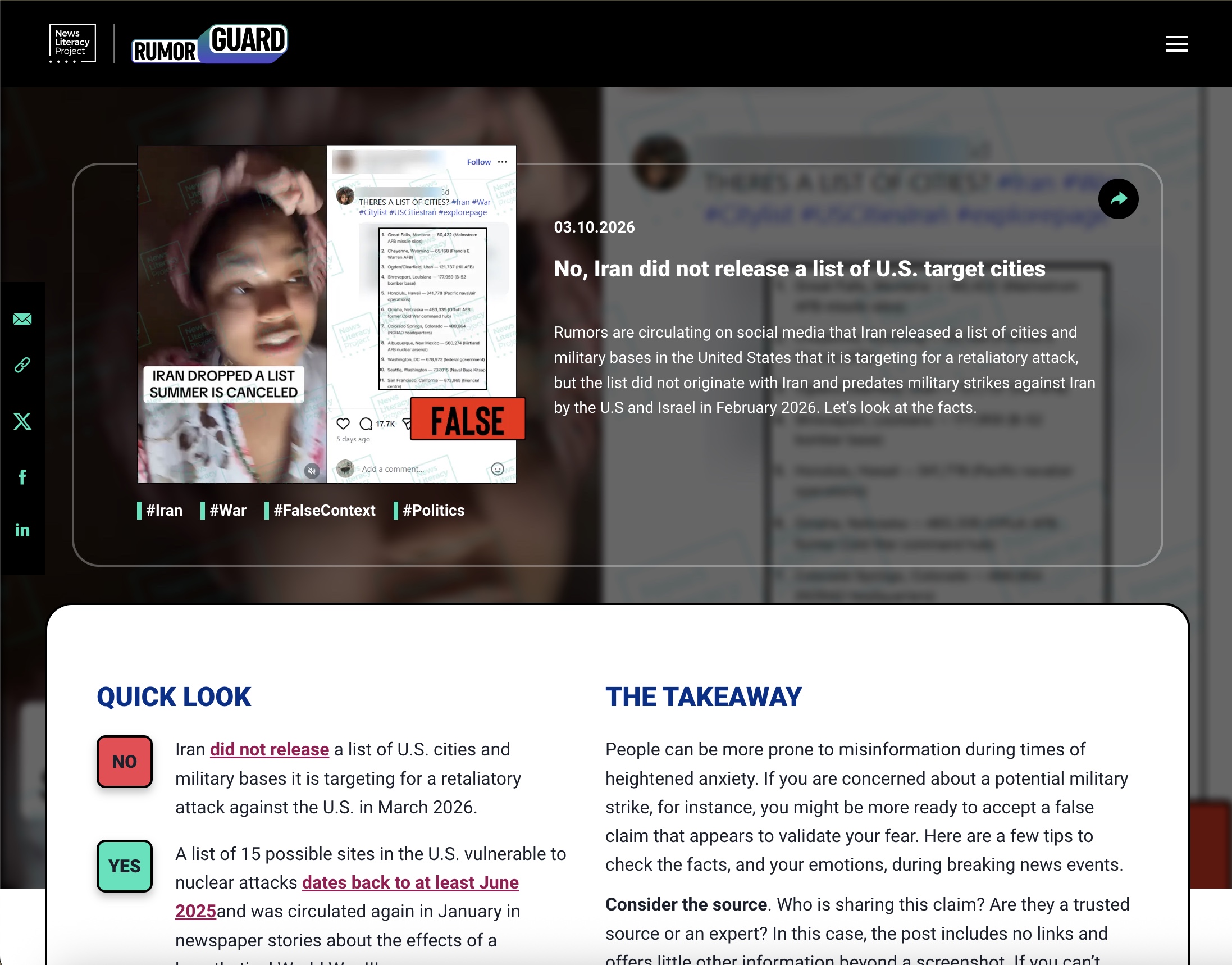
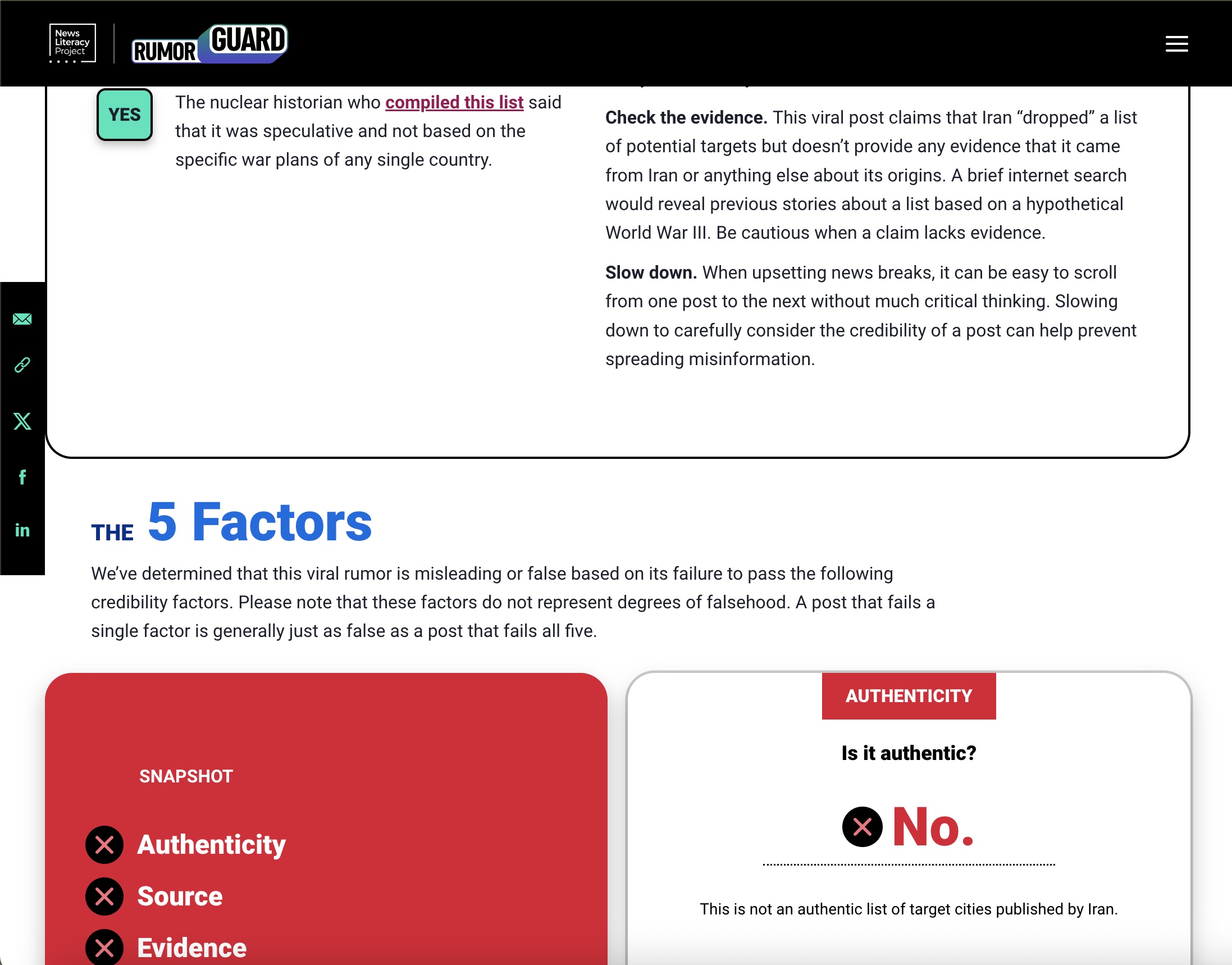
From using it myself, I can see how RumorGuard is effective because it does not just tell you something is false—it shows you how to figure that out on your own. That made it easier for me to understand how misinformation works and actually apply those same steps when I see things online!!!
Learning How Misinformation Spreads Through Harmony Square
From actually playing Harmony Square, I can see how effective it is in teaching participants about misinformation because it puts you in a position where you are actively creating it instead of just learning about it. For example, when I was rating posts about vaccines, the World Cup, and Bitcoin, I had to decide what looked believable and what didn’t, which made me realize how easy it is to confuse people with simple wording or strong claims. The game shows that misinformation spreads more when it sounds emotional, urgent, or controversial, even if it is not accurate.
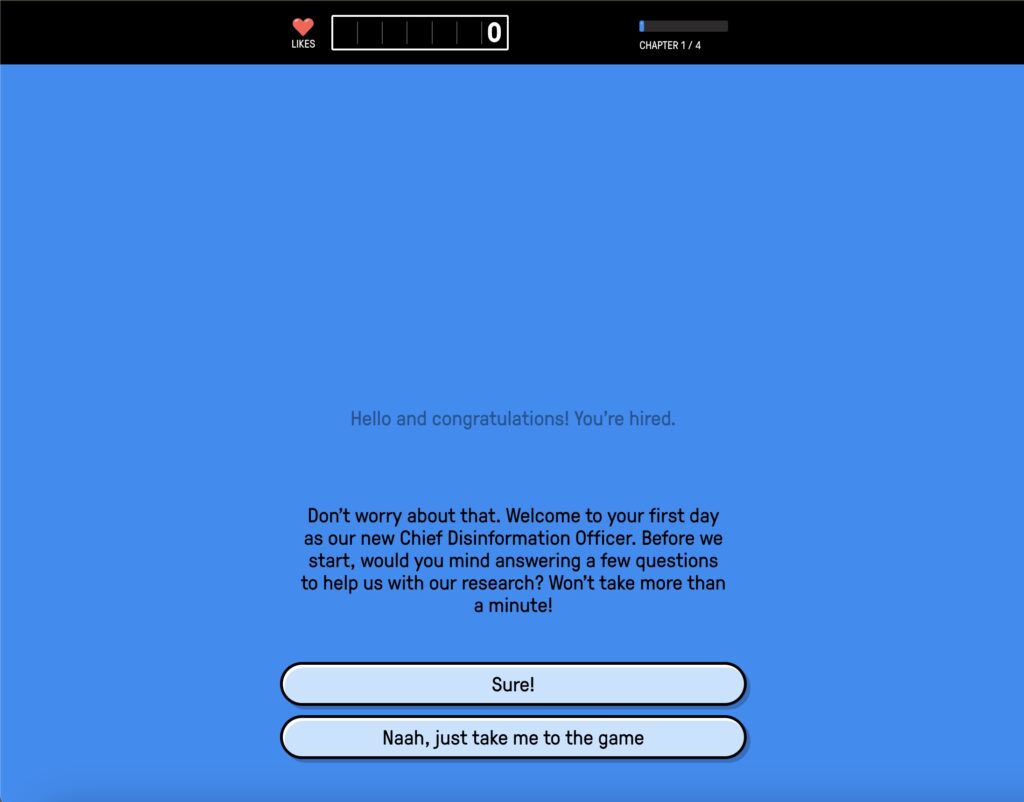
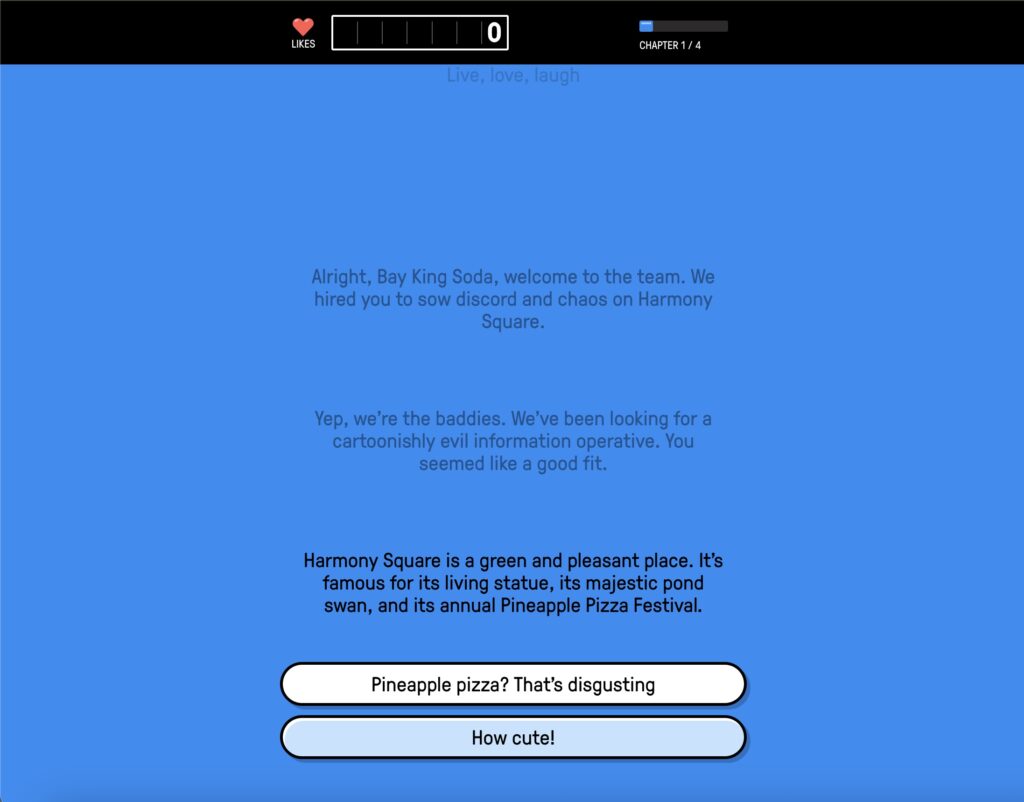
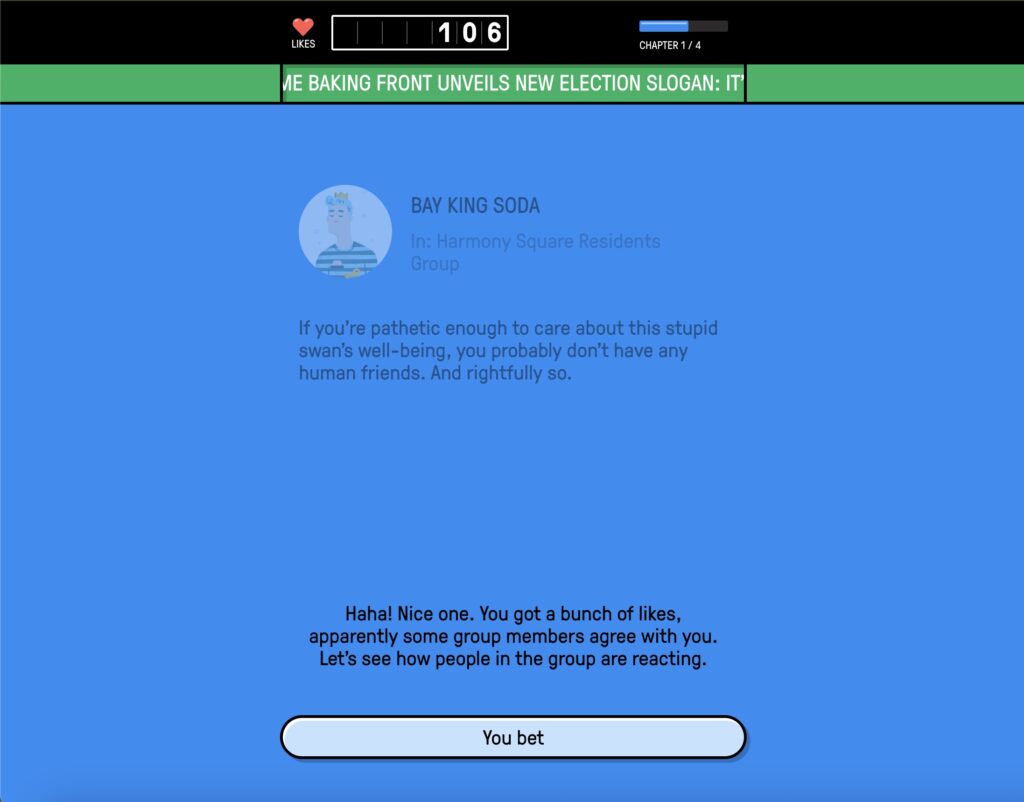
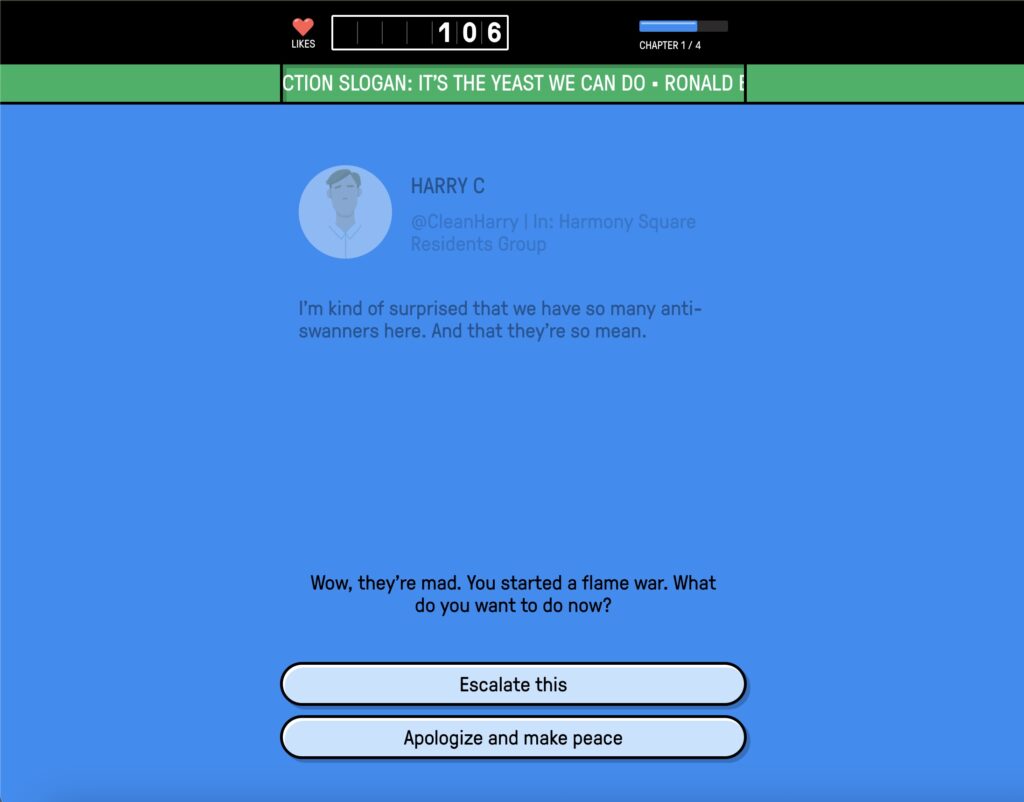
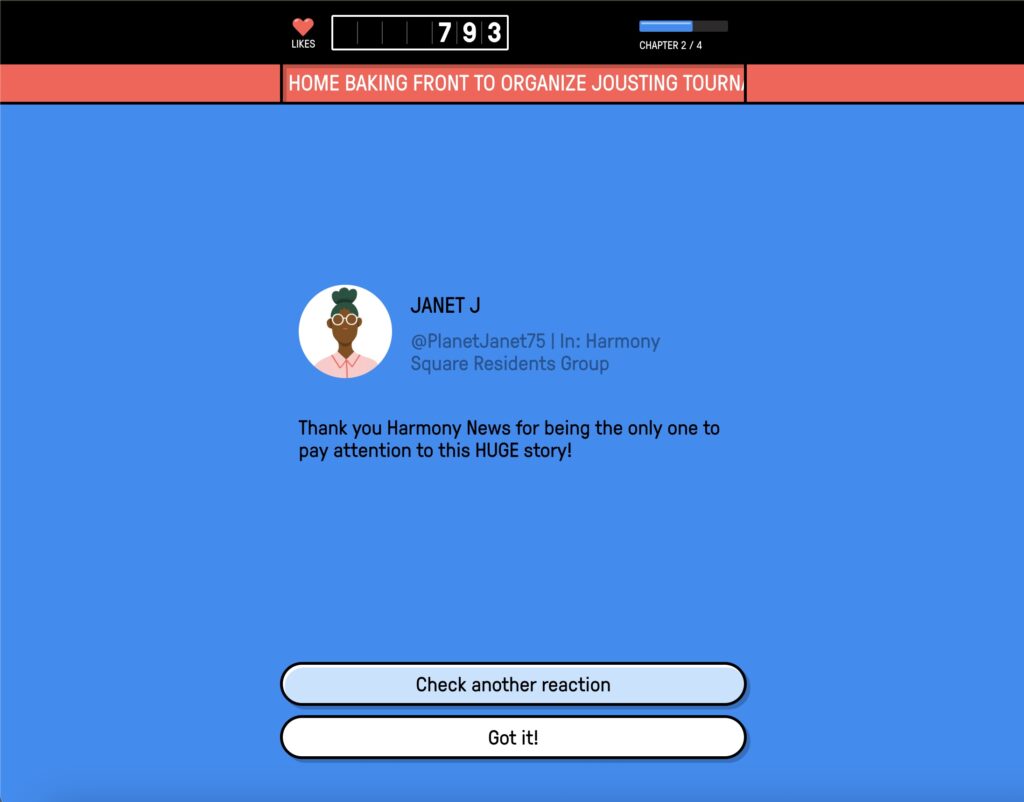

Harmony Square is an interactive game that teaches how misinformation spreads by putting you in the role of someone creating it. At the beginning, I was introduced as a “Chief Disinformation Officer,” which already showed that the goal of the game is to intentionally create chaos and influence people. As I played, I had to interact with posts and decide how believable they were, and later I was given choices to escalate situations, create conflict, and gain attention from others in the community.
What stood out to me is how the game uses realistic scenarios, like posts about vaccines, the World Cup, or Bitcoin, to show how people react to information online. I noticed that when posts were more emotional, dramatic, or controversial, they were more likely to get attention and reactions. The game also showed how quickly things can turn into arguments or “flame wars” when misinformation spreads, especially when I chose to escalate situations instead of resolving them.
From actually playing it, I learned that misinformation is not always about being completely false, but about how information is presented to influence people’s emotions and reactions. Seeing my follower count increase as I created more division made it clear how effective these tactics can be in real life. Overall, Harmony Square is effective because it lets you experience how misinformation works instead of just reading about it, which made it easier for me to understand and remember!
What made this effective for me is that I wasn’t just reading about misinformation—I was interacting with it and seeing how quickly it can influence decisions. That made it more memorable and realistic compared to just learning definitions. Because of this, I think Harmony Square is very effective in teaching participants how misinformation works and how easily people can be influenced if they don’t stop and think critically.
The following sources below provide additional support and context for how misinformation spreads and why tools like these are important.These sources back up what the tools showed by explaining how misinformation spreads and how people can actually check if something is real or misleading! Super cooooool!
HAPPY EASTER SUNDAY 05 April, 2026 Sunday

Leave a Reply